

Physiotherapy
How is Osgood-Schlatter Syndrome Treated?
Osgood-Schlatter Syndrome (OSS) is a common issue among young athletes experiencing rapid growth. The syndrome manifests as pain below the knee, where the thigh muscle tendon attaches to the shinbone. Although the pain can cause significant discomfort, OSS is typically not a serious medical condition and often improves with proper treatment.
Understanding Osgood-Schlatter Syndrome
Osgood-Schlatter Syndrome (OSS) is one of the most common causes of knee pain in adolescents, particularly during periods of rapid growth. This condition develops when repeated tension or overuse of the patellar tendon at its insertion site leads to inflammation. Activities such as jumping, running, or sudden directional changes can aggravate or worsen the symptoms. The pain associated with Osgood-Schlatter Syndrome is often described as sharp or burning, worsens during physical activity, and typically improves with rest. In some children, swelling or even a bulge on the front of the knee, representing the inflamed area, may also be observed.
The diagnosis of OSS primarily relies on clinical signs and symptoms observed by a physician during examination. In some cases, additional imaging, such as an X-ray, may be required to rule out other potential issues and confirm the presence of characteristic changes.

General Approaches to Treatment
The primary goal of treating Osgood-Schlatter Syndrome is to alleviate symptoms and allow continued physical activity at a level that does not cause pain. Conservative treatment methods, such as rest, cooling the affected area, and pain relievers, are typically effective in managing pain and inflammation.
- Rest: Reducing or adjusting activities that strain the knee and cause pain is essential. This does not mean completely ceasing all physical activities but rather avoiding those that exacerbate symptoms.
- Cooling the affected area: Regular application of ice to the affected area several times a day, especially after activities, can help reduce inflammation and relieve pain.
- Pain relievers: Non-steroidal anti-inflammatory drugs (NSAIDs) can be beneficial for reducing pain and swelling. These should always be used as directed by a physician.

In addition to these basic measures, it is important to perform specially tailored exercises under the supervision of a physiotherapist. These exercises can help strengthen the muscles around the knee and improve mobility. This not only aids in relieving current symptoms but can also prevent future problems.
The Role of Physiotherapy in Treating Osgood-Schlatter Syndrome
Physiotherapy plays a crucial role in treating Osgood-Schlatter Syndrome (OSS), as it not only helps alleviate symptoms such as pain and swelling but also prevents recurrence of the condition. A personalized physiotherapy program focuses on strengthening the muscles around the knee, improving joint mobility and stability, and reducing tension on the tibial tuberosity.
- Stretching exercises: Special attention is given to stretching the quadriceps and hamstrings, as excessive tension in these muscles can increase stress on the tibial attachment point. Stretching should be slow and gradual, avoiding additional pain.
- Strengthening exercises: Strengthening exercises for the quadriceps, hamstrings, and muscles around the knee help improve joint support and reduce stress on the affected area. Exercises such as bodyweight squats or resistance band exercises are performed under supervision to ensure proper execution and to avoid further injuries.
- Manual therapy: Physiotherapists may use manual techniques such as mobilization and massage around the affected area to improve circulation and help alleviate inflammation and pain.
- Proprioceptive exercises: Exercises that enhance body position and movement awareness (proprioception) are essential for improving knee stability and preventing future injuries.
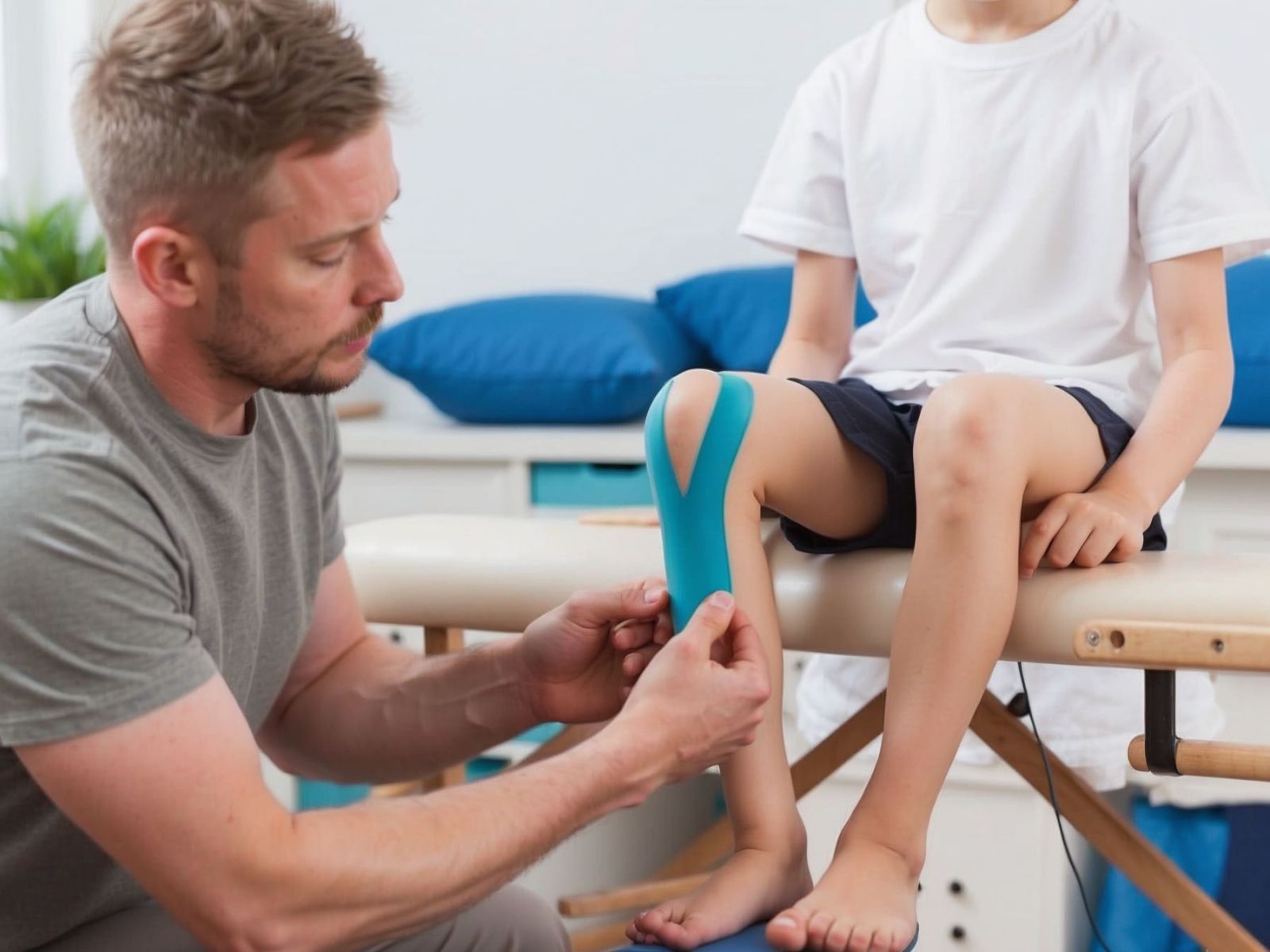
- Kinesiotaping: This technique uses elastic tapes to gently lift the skin above the affected area, which can help reduce pain and swelling.
To make the treatment as effective as possible, it is important for patients to incorporate the recommended exercises into their daily routine. It is generally advised to start with a smaller number of repetitions and gradually increase the intensity, always avoiding activities that cause pain.
Living with Osgood-Schlatter Syndrome
Living with Osgood-Schlatter Syndrome requires understanding and adaptation to minimize symptoms and maintain a high quality of life. Here are some key strategies:
- Gradual return to activities: Finding a balance between staying active and avoiding excessive strain that could worsen symptoms is essential. Planning activities and incorporating rest periods can help prevent symptom flare-ups.
- Understanding therapeutic approaches: Knowing how to perform prescribed exercises correctly, when to apply ice or heat, and when to reduce activities is crucial for long-term management of OSS.
- Psychological support: Seeking support from family, friends, or support groups can provide additional motivation and help in coping with the challenges of OSS. Sharing experiences and strategies for managing the condition can offer new perspectives and make dealing with difficulties easier.

Osgood-Schlatter Syndrome presents a challenge, but with the right approach, support, and adjustments, it does not have to limit an individual's active life. Following medical advice, actively participating in treatment, and maintaining a positive attitude are key to successfully managing OSS.