

Physiotherapy
Hallux Valgus - Misalignment of the Big Toe
Hallux valgus is a painful condition where the big toe deviates towards the other toes, while the first metatarsal bone, the largest bone in the forefoot, moves in the opposite direction. This causes a characteristic bulge on the side of the foot, which can lead to numerous other problems and pain.
What is Hallux valgus?
Hallux valgus is the medical term for a foot deformity where the big toe turns outward towards the other toes. This condition causes the formation of a painful bulge on the inner side of the foot, known as a bunion. Bunions are often red, swollen, and can cause significant discomfort and pain when walking.
The anatomy of the foot is complex, comprising 26 bones along with numerous muscles, tendons, and ligaments that work together to provide support, stability, and movement. Hallux valgus primarily affects the first metatarsophalangeal joint, where the big toe connects to the metatarsal bone. In hallux valgus, the joint at the base of the big toe shifts out of its normal axis, causing a deformity. This means the metatarsal bone moves outward while the big toe moves inward towards the other toes. This shift causes the joint to protrude outward, leading to the formation of a bunion.
Bunions can be extremely painful, especially when irritated by tight shoes or prolonged standing. The hallux valgus deformity is not just a cosmetic issue; it can severely impact the functionality of the foot. Due to improper weight distribution while walking, additional problems such as pain in the knees, hips, and back may arise. Moreover, bunions can make wearing regular footwear difficult, further limiting daily activities and diminishing quality of life.
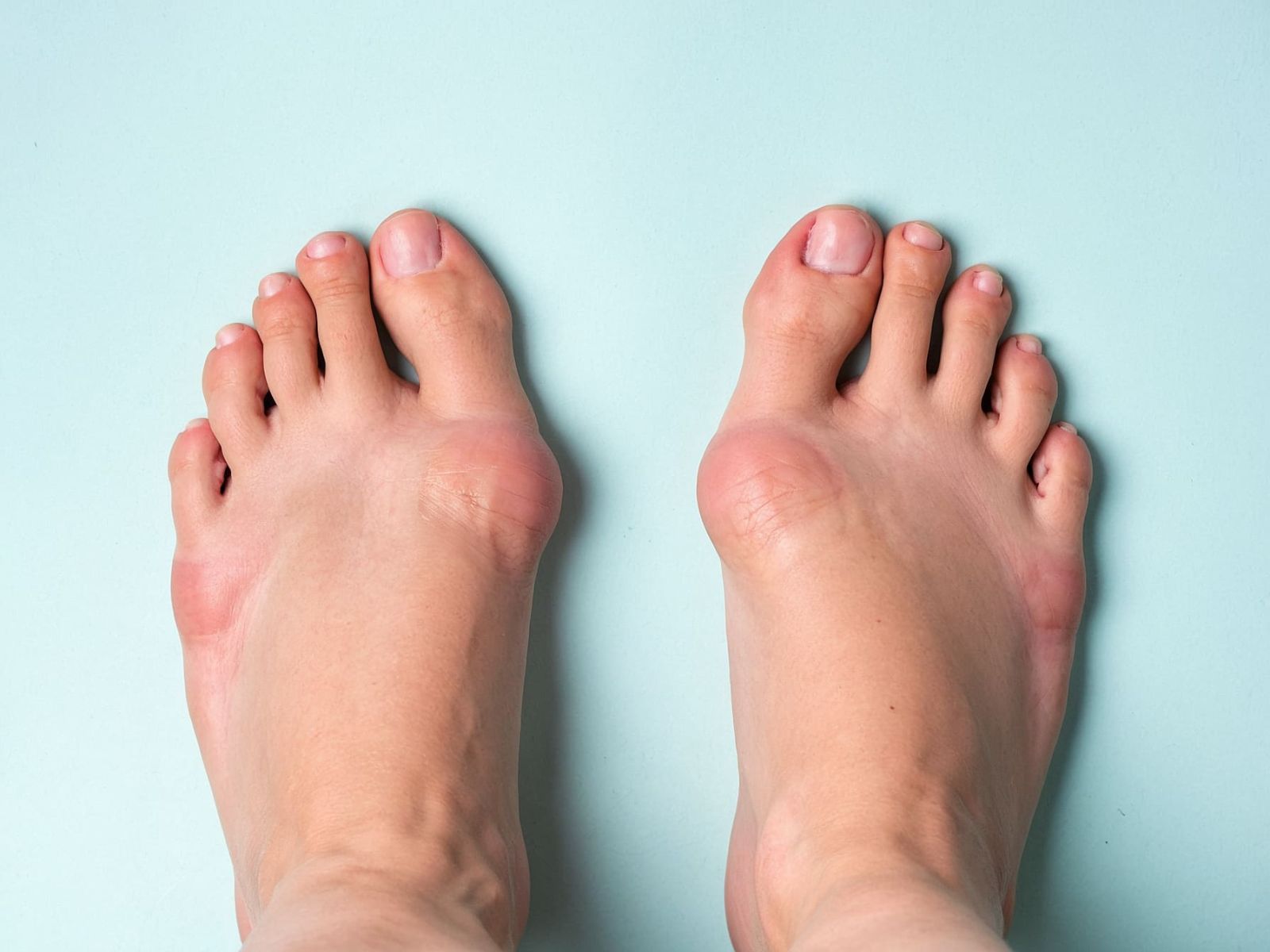
Understanding what Hallux valgus is, is crucial for recognizing and managing this issue. Early diagnosis and appropriate treatment can help prevent further complications and improve the condition.
Symptoms of Hallux valgus
The first signs of Hallux valgus often include pain and swelling at the base of the big toe, especially after prolonged standing or walking. The pain is usually caused by pressure on the bulge that forms on the inner side of the foot. Initially, the pain may be occasional but can increase over time and become persistent, particularly if the condition is not treated. Over time, the symptoms of Hallux valgus can progress and become more noticeable and disruptive.
- Enlarged bulge: This bulge, known as a bunion, becomes more pronounced as the big toe turns further towards the other toes. The bulge may be red, swollen, and painful to touch.
- Calluses and corns: Due to friction between the toes and footwear, hard, thickened skin (calluses) and corns often develop.
- Chronic inflammation and swelling: Persistent pressure and friction can cause chronic inflammation and swelling in the area of the big toe joint, leading to additional pain and discomfort.
- Limited mobility of the big toe: The joint deformity can result in reduced mobility of the big toe, making it difficult to move the toe up and down, which impairs walking and other activities.
- Difficulty wearing regular shoes: Due to the enlarged bulge and pain, wearing regular shoes can become extremely uncomfortable or even impossible. People with Hallux valgus often require wider or specially adapted footwear to reduce discomfort.
If left untreated, Hallux valgus can lead to serious complications, such as:
- Chronic pain: Persistent pain in the big toe joint and surrounding tissues can become debilitating and significantly impact quality of life.
- Arthritis in the big toe joint: Long-term deformity can lead to cartilage wear and the development of arthritis in the big toe joint. Arthritis causes additional pain, stiffness, and inflammation.
- Deformities of other toes: Due to pressure and altered weight distribution, deformities of other toes, such as hammer toes, may occur.

It is important for individuals to recognize the early signs of Hallux valgus and seek professional help to prevent the condition from progressing and developing complications. Timely diagnosis and appropriate treatment can significantly improve outcomes and quality of life.
Causes and Risk Factors
Hallux valgus is a multifactorial issue, meaning it is caused by various factors. Understanding these factors is key to preventing and managing the condition.
- Genetic factors: Hallux valgus often runs in families, indicating a strong hereditary component. If a parent or sibling has Hallux valgus, the likelihood of developing the condition is higher. Genetic factors can influence the shape and structure of the foot, such as flat feet or specific joint shapes, which increase the risk of developing the deformity.
- Improper footwear: Tight, narrow shoes or high heels are major environmental factors that can cause or worsen Hallux valgus. Such footwear puts unnatural pressure on the toes and joints, leading to deformation. High heels shift body weight forward, placing additional strain on the forefoot and big toe joints. Long-term use of improper footwear can result in permanent changes to foot structure.
- Association with other foot issues: Individuals with existing foot problems, such as flat feet (pes planus), high arches (pes cavus), or other deformities, are more susceptible to developing Hallux valgus. These issues can affect gait and weight distribution, increasing the risk of big toe deformation.
- Age and gender: Hallux valgus is more common in older women. Aging naturally leads to wear and weakening of joints and tissues, increasing the risk of deformities. Women face additional risk due to hormonal changes that affect the elasticity of ligaments and muscles and the frequent wearing of high-heeled and narrow-fronted shoes.
In addition to these main factors, there are also other less obvious risk factors:
- Excess weight: Excess body weight increases the strain on the feet and joints, potentially accelerating the development of Hallux valgus.
- Lack of physical activity: Insufficient physical activity can weaken the muscles and ligaments in the feet, increasing the risk of deformities.

Understanding the causes and risk factors of Hallux valgus is crucial for prevention and early intervention. Choosing proper footwear, maintaining a healthy weight, and engaging in regular physical activity can help reduce the risk of developing this painful and disruptive deformity.
Diagnosis of Hallux valgus
An accurate diagnosis of Hallux valgus is essential for planning appropriate treatment. Diagnosis typically involves several steps to determine the severity of the deformity and rule out other potential causes of foot pain. The first step in diagnosing Hallux valgus is a thorough clinical examination conducted by a doctor. This examination usually includes:
- Visual inspection: The doctor will carefully examine the foot to identify the presence of a bulge (bunion) and the degree of toe deformation. The skin around the bulge will also be checked for signs of inflammation, redness, or calluses.
- Palpation: The doctor will palpate the joint and surrounding tissues to assess pain, tenderness, and the presence of inflammation. Palpation helps identify the areas of greatest pain and any structural changes in the joint.
- Mobility assessment: The doctor will check the range of motion of the big toe and assess whether limited mobility is present. They will also evaluate if moving the toe causes pain.
- Symptom history: An essential part of the clinical examination is discussing the history of symptoms with the patient. The doctor will inquire about the duration, frequency, and intensity of pain, as well as any factors affecting the symptoms (e.g., wearing certain shoes, physical activity).
X-rays
X-rays are crucial for an accurate diagnosis of Hallux valgus. The doctor may use X-ray images to:
- Assess the severity of the deformity: X-rays provide a detailed view of the bones and joints in the foot. The doctor can measure the angle between the big toe and the metatarsal bone to determine the extent of the deformity.
- Rule out other issues: X-rays help exclude other potential problems such as arthritis, fractures, or other bone abnormalities that could be causing foot pain.
- Monitor progression: X-rays are also useful for tracking the progression of the deformity over time and evaluating the effectiveness of treatment.
Differential diagnosis
Differential diagnosis involves ruling out other possible causes of foot pain. The doctor may perform various diagnostic tests and examinations to exclude:
- Arthritis: Can cause pain and inflammation in joints, including the big toe joint. The doctor may use clinical examinations, X-rays, and blood tests to rule out arthritis.
- Gout: Gout is a type of arthritis caused by the accumulation of uric acid crystals in joints. It often affects the big toe joint, causing severe pain and swelling. Blood tests and clinical examination can help in excluding gout.
- Bursitis: Is the inflammation of bursae, small fluid-filled sacs that reduce friction between tissues in the body. It can cause pain and swelling around joints, including the big toe joint. Differential diagnosis may involve clinical examination and imaging tests.
 An accurate diagnosis of Hallux valgus is essential for selecting the appropriate treatment. Using clinical examinations, X-rays, and differential diagnosis, the doctor can determine the best approach to managing symptoms and preventing further complications.
Treatment of Hallux valgus
Treatment of Hallux valgus depends on the severity of symptoms, the degree of deformity, and individual needs. Approaches are divided into conservative and surgical methods. The goal of treatment is to relieve pain, improve foot functionality, and prevent further complications.
Conservative Treatment
Conservative methods are often the first choice for mild cases of Hallux valgus or for those who do not wish to undergo surgery. These methods include:
- Footwear adjustment: One of the most important conservative measures is choosing appropriate footwear. It is recommended to wear wider shoes with low heels and soft soles to reduce pressure on the bunion and enhance walking comfort.
- Orthopedic insoles: Orthopedic insoles or orthoses can help align the foot properly and reduce pressure on the affected joint.
- Exercises and physiotherapy: Exercises to strengthen the foot muscles and improve joint mobility are beneficial for managing Hallux valgus. Physiotherapists can teach patients specific exercises that strengthen the muscles around the big toe joint, improve balance, and alleviate pain.
- Pain relievers: The use of nonsteroidal anti-inflammatory drugs can help relieve pain and reduce inflammation. Pain relief is also possible with the application of cold compresses.
Surgical Treatment
Surgical treatment is used in severe cases of Hallux valgus when conservative methods are ineffective. The goal of surgery is to correct the deformity, relieve pain, and improve foot functionality. Surgical methods include various techniques:
- Osteotomy: Reshaping or cutting the bone to correct the axis of the big toe.
- Exostectomy: Removal of the bunion without correcting the bone axis.
- Arthrodesis: Joint fusion for stabilization and pain relief.
- Combined procedures: A combination of different techniques tailored to the patient's condition.

The treatment of Hallux valgus is a holistic process that requires an individual approach and collaboration between the patient and medical professionals. Early recognition of symptoms and appropriate treatment can significantly improve quality of life and prevent further complications.
Prevention of Hallux valgus
Prevention is key to reducing the risk of developing Hallux valgus or preventing the worsening of an existing condition. Taking appropriate measures can help maintain foot health and prevent pain and deformities.
- Recommendations for choosing the right footwear: Wear shoes that provide enough room for the toes, with low heels and good support. It is important that the footwear does not squeeze the toes or put excessive pressure on the forefoot.
- Exercises to strengthen foot muscles: Regularly perform exercises to strengthen the foot muscles and improve flexibility, which is important for maintaining healthy feet.
- Foot massage: Regularly massage the feet using a ball or roller to improve circulation and reduce muscle tension.
Regular check-ups with an orthopedist
Visit an orthopedist for regular check-ups, especially if you have genetic risk factors. An orthopedist can detect early signs of deformities and recommend appropriate preventive measures.
- Monitoring the condition: The orthopedist can monitor the condition of your feet and identify any changes or signs of worsening.
- Advice on footwear: The orthopedist can provide guidance on choosing suitable footwear and adjustments that may help prevent the development of Hallux valgus.
- Exercise recommendations: The orthopedist can recommend specific exercises to strengthen muscles and improve foot mobility.
- Orthopedic aids: If necessary, the orthopedist can prescribe orthopedic insoles or other aids to help align the foot correctly and reduce the risk of deformities.

Prevention is crucial for maintaining foot health and preventing the development of Hallux valgus. By taking appropriate measures, you can reduce the risk of pain and deformities and improve your quality of life.
Living with Hallux valgus
Living with Hallux valgus can present certain challenges, but with proper adjustments and pain management strategies, you can improve your quality of life. It is important to take steps to reduce discomfort and prevent further worsening of the condition.
Managing Pain and Discomfort
Pain and discomfort are often the main issues with Hallux valgus. Some ways to relieve symptoms include:
- Bunion pads: Soft pads placed over the bunion can reduce friction and pressure on the affected area. These pads are available at pharmacies and specialized medical supply stores.
- Cold compresses: Applying cold compresses to the affected area can help reduce inflammation and pain. It is recommended to apply cold compresses for 15-20 minutes several times a day.
- Anti-inflammatory medications: Nonsteroidal anti-inflammatory drugs can help relieve pain and reduce inflammation. Always consult a doctor before taking medications.
- Ointments and creams: Topical ointments and creams containing analgesic or anti-inflammatory ingredients can provide additional pain relief.
Adjustments in Daily Life
Managing Hallux valgus requires some adjustments in daily habits:
- Wear appropriate shoes: Choosing the right footwear is crucial. Wear shoes with enough room for the toes, low heels, and soft soles. Avoid tight shoes and high heels, as they can worsen the condition.
- Use orthopedic aids: Orthopedic insoles, braces, and other aids can help properly align the foot and reduce pressure on the joints. Consult an orthopedist for recommendations on the best aids for your condition.
- Watch your weight: Maintaining a healthy body weight reduces the strain on your feet and joints, which can help prevent worsening symptoms.
- Regular physical activity: Incorporate gentle exercises to strengthen the foot muscles and improve flexibility.
Support and Counseling for Patients
Living with chronic pain and deformities can also affect mental health.
- Support groups: Connect with others who have Hallux valgus through support groups or online forums. Sharing experiences and advice can bring relief and support.
- Education: Educate yourself about your condition and treatment options. The more you know about Hallux valgus, the better equipped you will be to make informed decisions about your health.
- Regular check-ups with a doctor: Regular visits to a doctor or orthopedist are important for monitoring the condition and adjusting the treatment plan. The doctor can track the progression of the deformity and recommend additional measures if needed.
- Overall health care: Take care of your overall health, as general physical fitness and nutrition can affect your feet. A balanced, nutrient-rich diet and regular physical activity contribute to better bone and joint health.

Living with Hallux valgus requires adjustments, but with the right approach and support, you can effectively manage the symptoms and improve your quality of life. It is essential to be aware of your condition, educate yourself about treatment options, and seek support when needed.